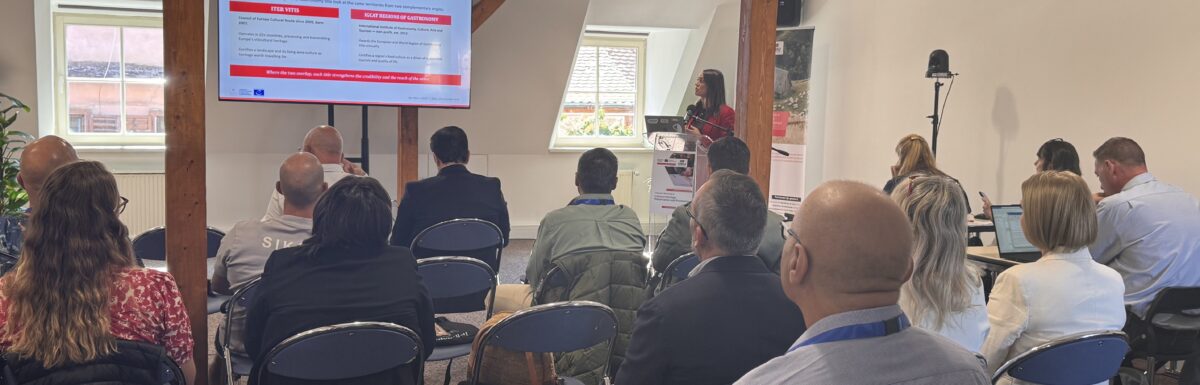
From 15 to 17 September 2026, the Sibiu County Tourism Association (OMD Sibiu) hosted the interregional thematic workshop of EnoGastroDEST, the Interreg Europe project dedicated to eno-gastronomy as a driver of sustainable, experiential tourism. Partners from eleven countries — Greece, Germany, Cyprus, Spain, Portugal, Hungary, Italy, Bosnia and Herzegovina, the Republic of Moldova, France and Romania — gathered in Sibiu, itself a European Region of Gastronomy since 2019, to exchange good practices on preserving and promoting culinary heritage.
The workshop format is built around peer learning: each partner brings a concept, programme or public policy that has already proven itself at home and could travel to other European regions. This edition’s exchange ranged widely. Romania presented its Local Gastronomic Point concept — farms and households that welcome travellers to the table with food grown and raised on site. Bremerhaven, Germany, shared “From Sea to Plate,” a route linking fishing, marine research and museums around the story of fish. Cyprus told the story of Halloumi, a protected European product around which an entire visitor route has been built, while Hungary’s Baranya region presented the three-hundred-year-old tradition behind Feked salami. Porto and Northern Portugal showcased their Gastronomic Weekends, promoting each community’s distinct culinary heritage, and Bosnia and Herzegovina brought its festivals dedicated to traditional regional products. France’s Bourgogne-Franche-Comté described its work through the “Produits Gourmands” thematic network, the Republic of Moldova explained how it turned its Wine Road from simple tastings into a competitive tourism product, and Granada’s partners — alongside the Andalusian Academy of Gastronomy and Tourism — presented “Sabor Granada,” which connects historic recipe research with culinary schools and local producers under a shared quality mark.
Where Iter Vitis fits in
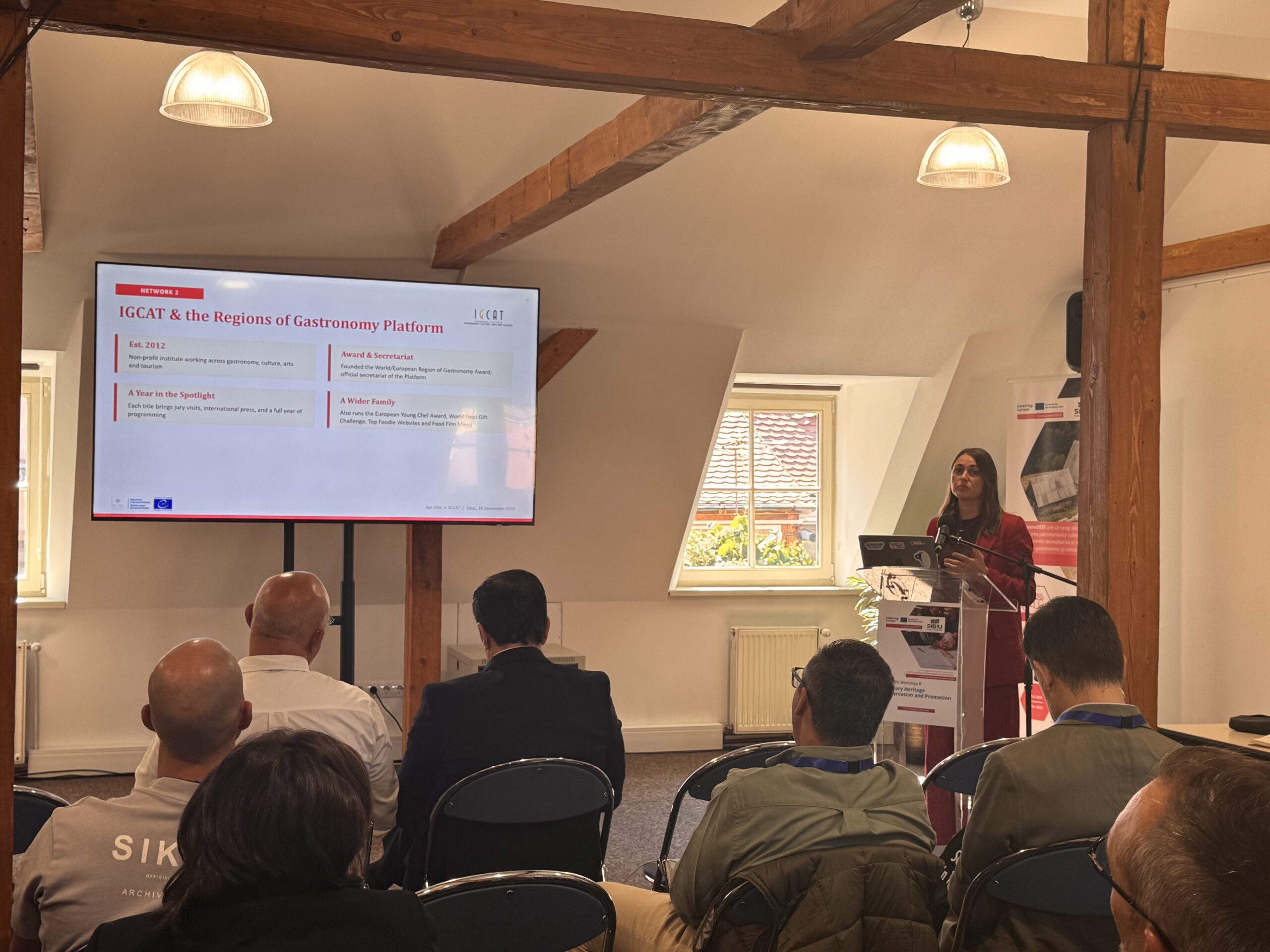
The workshop’s agenda explicitly raised the question of how European networks and titles — Iter Vitis, the Council of Europe’s Cultural Route dedicated to wine heritage, and the European Region of Gastronomy title that Sibiu itself has held since 2019 — can support a destination’s gastronomic ambitions. Iter Vitis Project Coordinator Natalia Turcanu took the floor to answer that question directly, with a presentation titled “Two Titles, One Territory.”
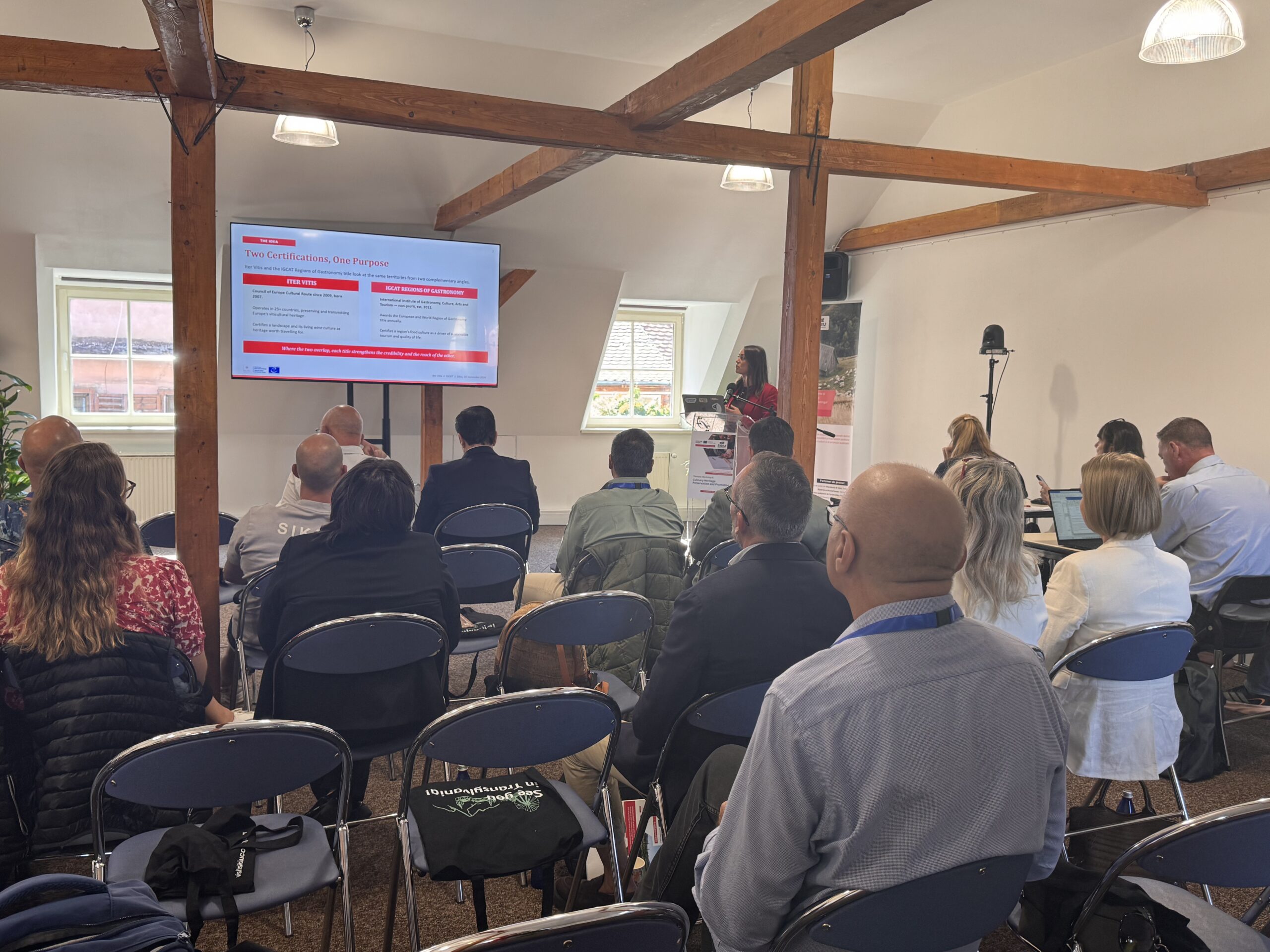
Her argument: Iter Vitis and IGCAT’s Regions of Gastronomy title look at the same places from two complementary angles. One certifies a landscape and its living wine culture as heritage worth travelling for; the other certifies a region’s food culture as a driver of sustainable tourism and quality of life. Where the two overlap, each title strengthens the credibility and the reach of the other — and this is already happening, not just in theory. Turcanu walked through three cases already written into Iter Vitis’s own story: Kvarner, Croatia, whose native Zlahtina and Vrbnik vineyards gave its 2026 Gastronomy title a deeper historical register; Crete, whose Heraklion already features in Iter Vitis’s own archaeology and archaeobotany programme; and, most strikingly, Sicily, whose 2025 candidacy dossier — Italy’s first — names Iter Vitis Cultural Routes outright, alongside the island’s Phoenician heritage and the wineries of Marsala, as one of the historical resources behind the bid.
The presentation closed with a concrete proposal: a light protocol under which regions newly awarded the IGCAT title are proactively invited to explore accession to Iter Vitis wherever a wine heritage exists, and Iter Vitis member territories are supported in preparing their own Region of Gastronomy bids — turning two separate applications, competing for the same local resources, into two frameworks pulling in the same direction. With Sibiu (2019), Harghita (2027), and Banat and Dobrogea both advancing as candidates, Romania offered a timely and fitting backdrop for the idea.
Beyond the working sessions, participants experienced Sibiu’s gastronomy directly, with culinary tours, visits to local restaurants and Local Gastronomic Points, and excursions into the landscapes shaped by transhumance. All of the practices and exchanges from the workshop will feed into a forthcoming roadmap for the development of gastronomic tourism in the Sibiu Destination.
EnoGastroDEST — “Eno-gastronomy in the development of sustainable experiential tourism, with the protection of eno-culinary heritage” — is co-funded by the Interreg Europe programme and the European Union.